MN Sober Living: Surviving the 2025 Payment Ban
The New Financial Reality for Minnesota Sober Living
For years, many independent sober living operators in Minnesota relied on a consistent revenue stream: direct payments from addiction treatment providers covering housing costs for their outpatient clients. Effective August 1, 2025, that model is gone. A new state anti-kickback law now prohibits this practice, classifying it as an illegal incentive that limits resident choice and creates fraud risks. This change fundamentally alters the financial foundation for any Minnesota sober living home that previously partnered with clinical providers.
While the law aims to align state rules with federal statutes and increase ethical standards, it has created an immediate and significant operational challenge. Without a clear transition plan from the state, operators are now solely responsible for navigating a new financial landscape. Success is no longer about maintaining clinical relationships; it is about building a resilient, independent business model grounded in operational excellence, diverse funding, and measurable resident success.
A Proactive Strategy for Financial Sustainability
The prohibition on treatment provider payments requires a strategic pivot. Instead of reacting to revenue loss, proactive operators are building stronger, more self-sufficient businesses. This involves a three-part focus: diversifying revenue, mastering a complex compliance environment, and proving your home’s value with concrete data.
Diversifying Your Revenue Streams
Your business must now stand entirely on its own financial feet. The primary revenue source will shift to resident fees, but relying on this alone can be risky. A multi-pronged funding strategy provides stability.
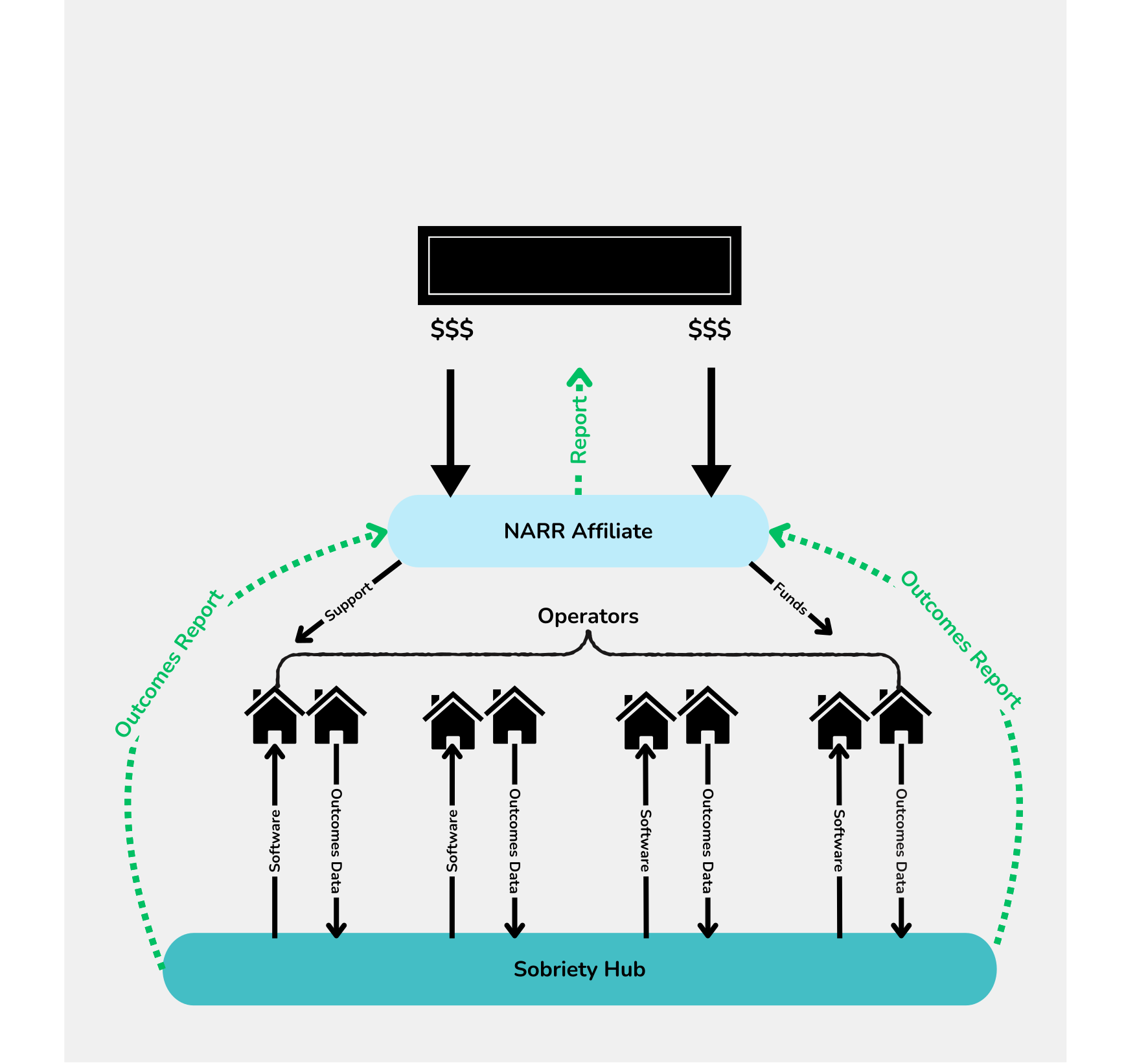
- Resident Self-Pay Models: The most direct path is a fee-for-service structure where residents are responsible for their own rent. This requires clear financial agreements at intake and consistent rent collection processes. Automating rent collection can reduce administrative work and improve cash flow.
- Grant and Foundation Funding: Billions in opioid settlement funds are being allocated nationwide, and states like Michigan and New Jersey have committed tens of millions specifically to recovery housing. Federal sources, such as HUD’s Recovery Housing Program, also offer grant opportunities for operators who can demonstrate quality and effectiveness.
- Community and Employer Partnerships: Forge relationships with local businesses, workforce development agencies, and charitable organizations. Some employers may be willing to sponsor housing for an employee in recovery, while community groups may offer scholarships or financial aid to residents.
Mastering State and Local Compliance
Minnesota does not have a specific state license for sober homes, but compliance is mandatory and complex. The state is phasing out its old “board and lodge” program and plans to introduce a “certified recovery residence” model by 2027. Until then, you must navigate a patchwork of existing rules.
- Local Zoning and Ordinances: Your most immediate compliance burden is at the municipal level. Research your city’s zoning code for definitions of “family” or “group home” and any rules regarding the number of unrelated residents. Proactively engage with city planning departments to ensure your operation is permissible.
- Federal Protections: Remember that the Fair Housing Act (FHA) and Americans with Disabilities Act (ADA) are your allies. These federal laws protect individuals in recovery as a disabled class, requiring cities to provide “reasonable accommodations” to zoning rules that might otherwise exclude your home.
- State Health and Safety Laws: Your property must meet all state and local fire, building, and sanitation codes. If you house five or more residents, you may be classified as a “lodging establishment” and require an annual license from the Department of Health. Furthermore, you have a legal duty to protect residents under the Minnesota Vulnerable Adults Act, which mandates reporting of any suspected abuse or neglect. Keeping detailed compliance documentation is not optional.
Proving Your Value with Functional Recovery Metrics
In this new environment, demonstrating your home’s effectiveness is critical for attracting private pay residents and securing grants. Move beyond simply tracking abstinence and focus on “functional recovery,” which measures a resident's progress in rebuilding a stable, productive life.
Data shows that quality recovery housing works. For example, studies reveal unemployment among residents can drop by 40% from intake to departure. Upon leaving, nearly 60% of residents move to stable housing situations. Furthermore, residents who stay for six months or longer have a 70-80% success rate in maintaining sobriety. Consistently tracking outcomes like employment status, housing stability, and reduced legal system involvement provides undeniable proof of your program’s value to funders, families, and municipal officials.
Operator's Ledger: The Math of Post-2025 Operations
Adapting to Minnesota’s new law requires a clear understanding of the numbers. Use these metrics to assess your financial health and guide your strategic planning.
- Revenue Gap Per Resident: The loss of treatment provider stipends, which often averaged around $700 per resident per month, creates a direct revenue hole you must fill through other means.
- Break-Even Occupancy Rate: Most sober living homes require approximately 70% occupancy to cover operational costs. With residents now shouldering the full cost, maintaining this rate requires rigorous financial screening at intake and a supportive environment that encourages longer stays.
- Key Performance Indicator: Length of Stay (LOS): This is your most critical functional metric. An average LOS of six months or more correlates to a 70-80% success rate. A longer LOS directly improves resident outcomes and stabilizes your revenue.
- Functional Recovery Metrics to Track:
- Employment Rate at Exit: Target having 60% or more of your departing residents employed.
- Stable Housing at Exit: Aim for over 50% of residents transitioning to permanent housing or living with friends and family.
- Justice System Involvement: Track the percentage of residents with no new law enforcement encounters during their stay. A rate of 95% or higher is an excellent benchmark.
The era of relying on treatment provider payments is over. Your survival and growth now depend on your ability to operate as a professional, data-driven housing provider. By diversifying your funding, ensuring rigorous legal compliance, and proving your positive impact on residents' lives, you can build a sustainable and successful Minnesota sober living operation.
Your actionable takeaway for this week: Identify one local workforce development agency or a large employer in your area. Contact them to schedule a brief meeting to discuss how your recovery residence helps create a stable, reliable workforce, and explore potential partnerships for resident employment.