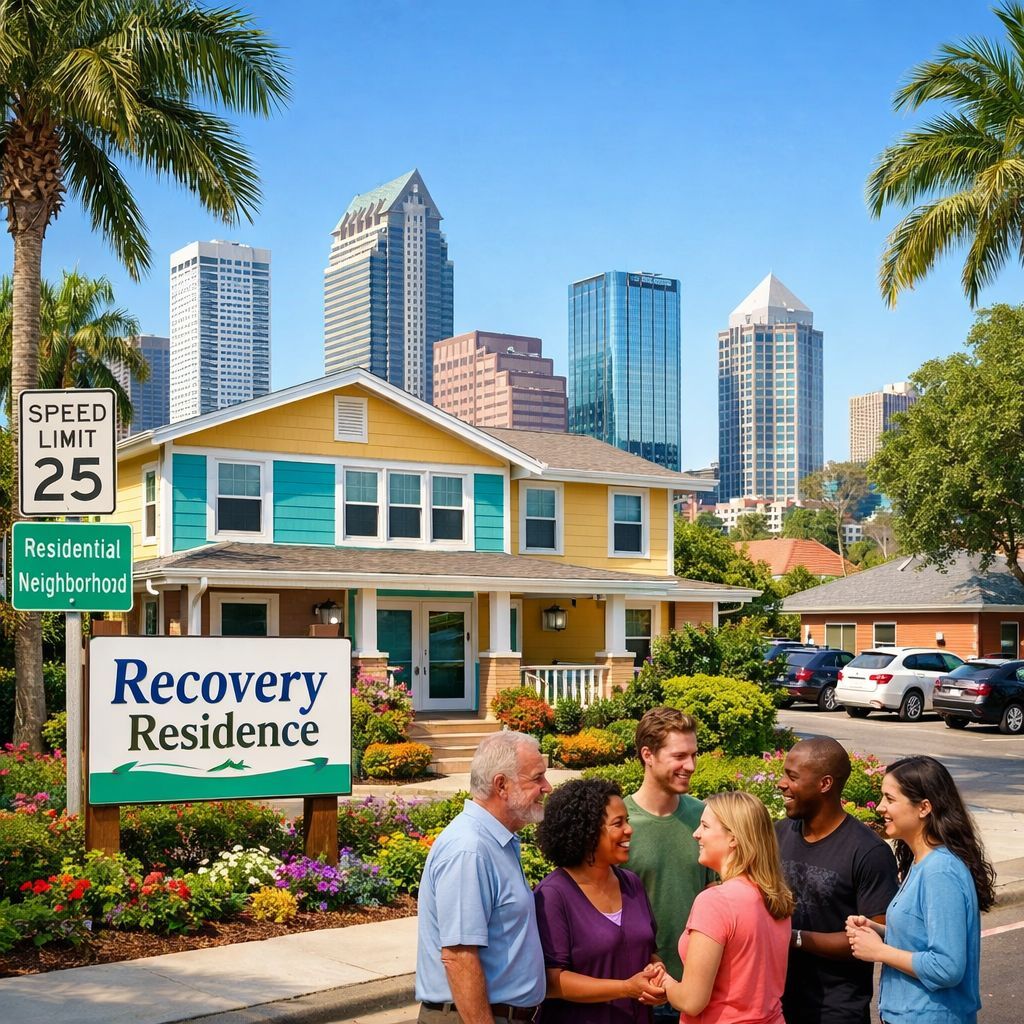
Charlotte, NC Sober Living Operator's Guide
Navigating Charlotte's Regulatory Landscape
For independent sober living operators in Charlotte, North Carolina, success depends on mastering a three-tiered regulatory system. Your operations are not governed by a single state license, but by the interplay of federal anti-discrimination law, state statutes protecting small group homes, and specific local zoning rules found in the Charlotte Unified Development Ordinance (UDO). Understanding how these layers interact is the first step toward building a sustainable and legally protected recovery residence. This Charlotte, NC sober living operator's guide provides the blueprint for compliance and strategic growth.
The Foundation: Federal Fair Housing Act (FHA) Protections
The most powerful tool in your legal arsenal is the federal Fair Housing Act. The FHA prohibits housing discrimination based on disability, and courts have consistently affirmed that individuals in recovery from substance use disorder are a protected class under this law. This protection is not abstract; it has direct operational consequences.
The key provision for operators is the requirement for municipalities to provide a "reasonable accommodation." This means the city must make exceptions to its rules or policies when necessary to give people with disabilities an equal opportunity to use and enjoy a dwelling. For sober living homes, this most often applies to zoning ordinances that limit the number of unrelated people who can live in a single-family home. If you can demonstrate that a higher number of residents is necessary for the financial viability and therapeutic peer-support model of your home, you have a strong legal basis to request an exception to the local occupancy limit.
The State-Level Shield: North Carolina's 'Family Care Home' Statute
North Carolina state law provides a specific and valuable protection for smaller recovery residences. N.C. General Statute § 168-21 defines a "family care home" as a residence providing room, board, and support services for up to six residents with disabilities. The statute is explicit: a family care home is considered a residential use for zoning purposes and is a permitted use in all residential districts. Critically, G.S. § 168-22 prevents municipalities like Charlotte from requiring a special use permit or variance for a qualifying family care home. This state law provides your baseline right to operate a home for up to six residents in a residential neighborhood without special municipal permission, though the city can enforce a half-mile separation distance between such homes.
The Local Rulebook: Charlotte's Unified Development Ordinance (UDO)
Effective since June 2023, the Charlotte UDO is the primary local document you must follow. It offers two main pathways for operating a sober living home:
- As a 'Family': The UDO defines a 'family' to include up to six unrelated individuals living together as a single housekeeping unit. If your home has six or fewer residents and functions cooperatively, with shared chores and responsibilities, it is generally treated like any other family dwelling in a residential zone. This is the most straightforward path to compliance for smaller homes.
- As a 'Group Home': The UDO references the state's 'family care home' definition for its own 'group home' classification. This path has different rules based on location. In 'Neighborhood 1 Place Type' zones, capacity is limited to six residents. In other residential districts, capacity can be up to ten residents. However, operating as a designated group home in a single-family district triggers an 800-foot separation requirement from any other existing group home.
It is important to note that House Bill 813, effective January 1, 2026, does not apply to most peer-run sober living homes. Its regulations for "registered residential facilities" are specific to homes that arrange for licensed clinical or personal care services, which is outside the scope of a typical independent sober living model.
The Fresh Start Precedent: Your Legal Blueprint for Expansion
The most significant local legal event for Charlotte operators is the 2015 Zoning Board of Adjustment ruling for Fresh Start Sober Living. This case established a direct, local precedent for using the FHA's reasonable accommodation principle to increase resident capacity beyond the standard UDO limits. It is not just a court case; it is a strategic roadmap.
The Operator's Request vs. The Board's Decision
Fresh Start Sober Living operated three homes in single-family zones and requested a reasonable accommodation to increase its capacity to 11 or 13 residents per home, arguing it was essential for financial and therapeutic success. The Zoning Board of Adjustment agreed in principle, acknowledging that residents were a protected class under the FHA and that an accommodation was necessary.
However, the Board did not grant the full request. Instead, it performed a balancing act. It found the full request unreasonable due to potential impacts on neighborhood character, traffic, and parking. The final decision was a partial accommodation:
- 5901 Amity Place: Approved for 8 total residents (an increase of 2).
- 326 Bass Lane: Approved for 10 total residents (an increase of 4).
- 3515 McManus Drive: Approved for 10 total residents (an increase of 4).
Key Takeaways from the Ruling for Your Business
The Fresh Start decision provides several critical lessons for today's operators. First, it proves that the reasonable accommodation process works in Charlotte. Second, it shows that your request must be truly 'reasonable.' You must be prepared to justify your numbers with financial data and explain how your operational model mitigates neighborhood impact. Third, the process is a negotiation. The city has the right to weigh your request against its legitimate interest in preserving neighborhood character. Documenting your home's positive impact and responsible management is key to a successful outcome. This includes maintaining detailed records and demonstrating program effectiveness through solid outcomes data.
Operator's Ledger: The Financial Math of a Charlotte Home
Understanding the legal framework is only half the battle. Applying it to your financial model is where sustainability is won or lost. The Fresh Start ruling directly impacts your bottom line, and pursuing a reasonable accommodation is a calculated business decision.
- Baseline Revenue (6 Residents): At an average monthly fee of $650 per resident, a UDO-compliant 6-bed home generates a maximum of $46,800 in annual revenue.
- Increased Revenue (8 Residents): Winning a reasonable accommodation for just two additional residents increases maximum annual revenue to $62,400. That is an additional $15,600 per year, which could cover property taxes, major repairs, or capital improvements.
- Cost of the Request: Budget for legal and administrative costs. A well-prepared reasonable accommodation request can involve legal consultation, financial analysis, and testimony preparation. A reasonable budget for this process is between $5,000 and $15,000, depending on complexity and potential for appeals.
- Return on Investment: An investment of $10,000 in legal fees to gain two additional resident slots could pay for itself in less than eight months. This makes pursuing an accommodation a high-ROI activity for a well-managed home.
- Administrative Burden: The process requires meticulous record-keeping. You will need to produce pro-forma budgets, current financial statements, and documentation of your operational model. Automating rent collection through a dedicated system for sober living payments can free up administrative time and provide clear financial records for your request.
Strategic Operations in the Queen City
A successful Charlotte operation requires more than just legal compliance; it demands strategic planning and proactive community engagement.
Site Selection and Zoning Due Diligence
Before you sign a lease or purchase agreement, conduct thorough due diligence. Use the city's official UDO portal to verify the zoning district and 'Place Type' of a potential property. Measure the distance to any other known group homes in the area to check compliance with the 800-foot separation rule. Choosing a property in a zoning district that allows up to ten residents by right (i.e., not a 'Neighborhood 1' zone) can provide a smoother path to a larger capacity. Efficiently managing site selection across multiple potential locations is a core part of growing your sober living business.
Building a Defensible Reasonable Accommodation Request
If you plan to seek an accommodation, begin preparing your case from day one. Your request should be a professional, data-driven proposal. It must clearly demonstrate two things: that the accommodation is necessary and that it is reasonable. 'Necessary' means proving that without the extra residents, your home is not financially viable or therapeutically effective. 'Reasonable' means showing how you will manage parking, noise, and property upkeep to be a good neighbor. This requires organized paperwork, from intake packets to house rules, which can be managed with tools designed for sober living compliance.
Community Relations and Proactive Engagement
Do not wait for a zoning dispute to introduce yourself to the neighborhood. Operate with excellence from the start. Maintain your property meticulously. Have a clear transportation plan for residents to minimize street parking. Establish a single point of contact for neighbors to call with any concerns. By building a reputation as a responsible, low-impact operator, you build political capital that can be invaluable during a zoning hearing.
Your primary takeaway should be this: do not assume the six-person limit is an unbreakable barrier. The law and local precedent are on your side for expansion, but it requires a professional, data-driven, and strategic approach. This week, identify a potential property and use the Charlotte UDO mapping tool to determine its exact zoning designation and any nearby group homes. This initial research is the first concrete step in building your expansion strategy.